A Cryo Chamber for the Hotel Spa: The Operator’s Buying Checklist
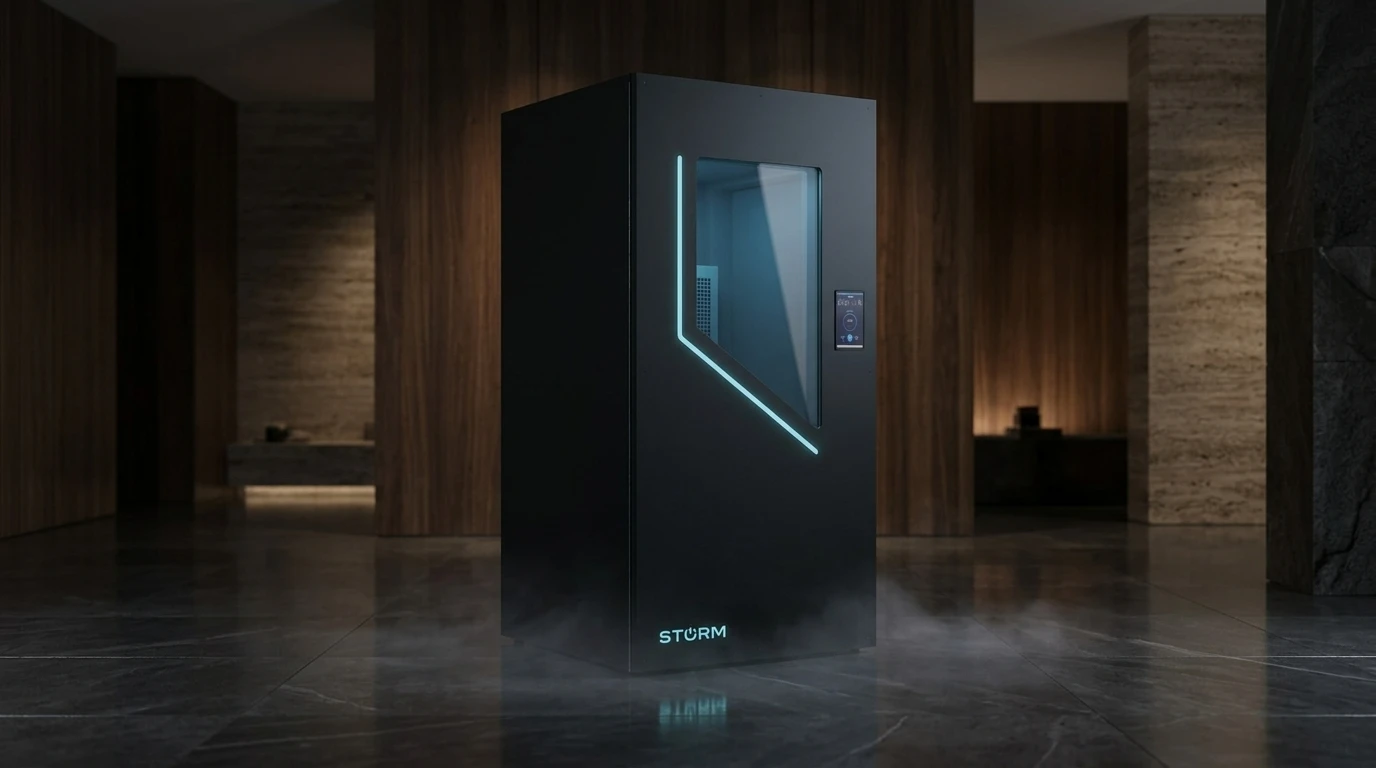
For hotels and spas, a cryo chamber is more than a wellness extra: it is a differentiator in the premium segment and a building block of modern recovery offerings. But not every system suits every operation. This checklist sums up the criteria that really matter when purchasing – derived from the physiology and from operating practice.
1. What the temperature figure really means
Cryo-chamber temperatures are quoted in different ways – as evaporator, air or windchill values. What matters is not a single marketing number, but transparency about which value is being quoted and how reliably and reproducibly it is reached in operation. For the effect on the body, what ultimately counts is the skin temperature actually reached, which results from temperature, air movement and session duration. So ask which temperature figure a provider quotes – and whether that value is documented and repeatably achieved.
2. Design: true chamber or cabin
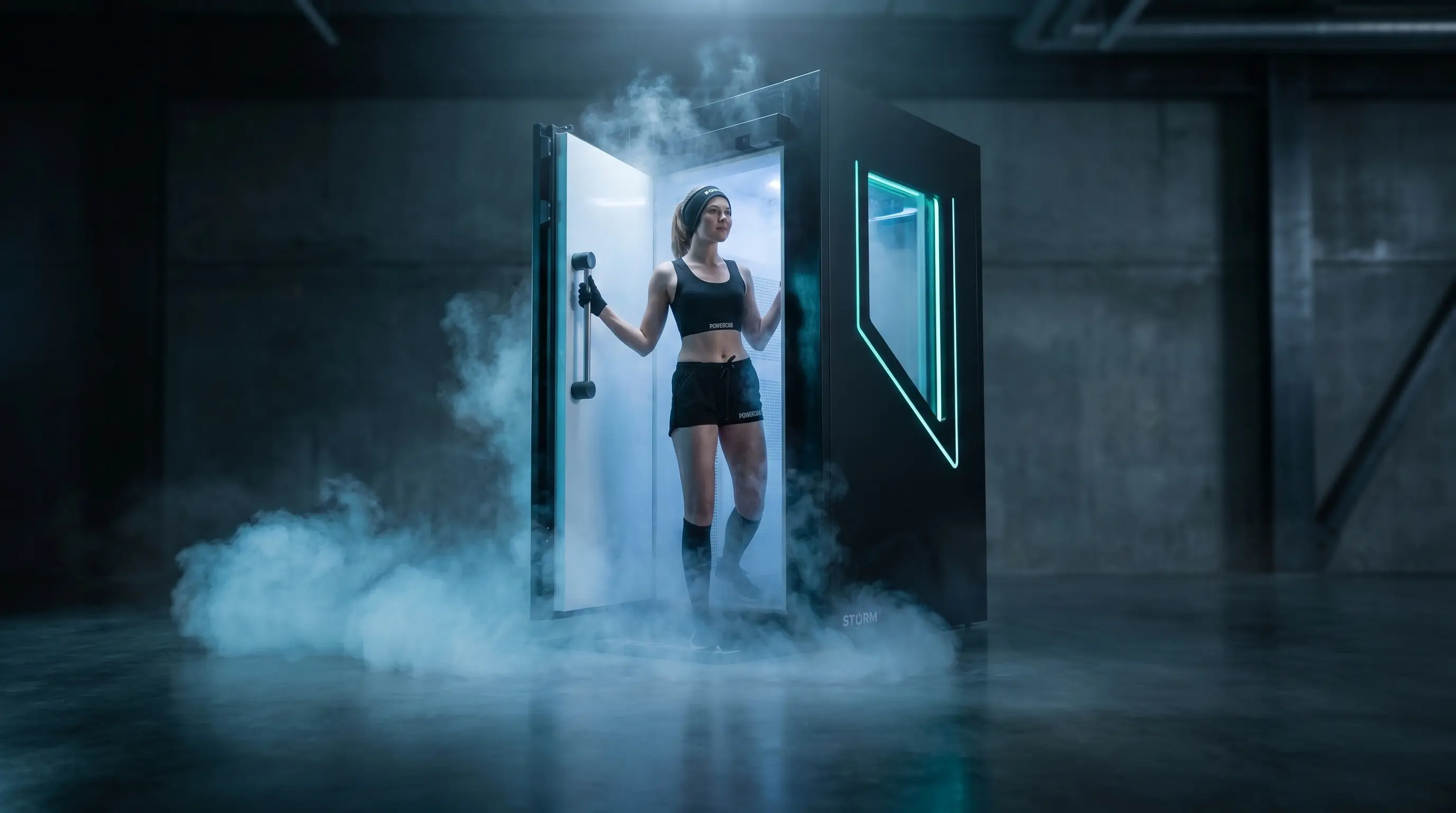
A true whole-body cryo chamber encloses the entire body including the head; a partial-body cabin leaves the head free (Bouzigon et al., Journal of Thermal Biology, 2016). Exposing the head as well is associated in the literature with an additional parasympathetic response. For a high-quality spa offering, the full whole-body application is usually the more convincing choice.
3. Uniform temperature control
Cold air is denser and stratifies at the bottom. In systems without good control, a vertical gradient forms that leads to uneven cooling (Jdidi et al., Journal of Physiological Anthropology, 2024; Savic et al., Journal of Thermal Biology, 2013). An even temperature distribution is therefore a genuine quality feature – and the basis for a reproducible guest experience.
4. Cold generation: electric or nitrogen
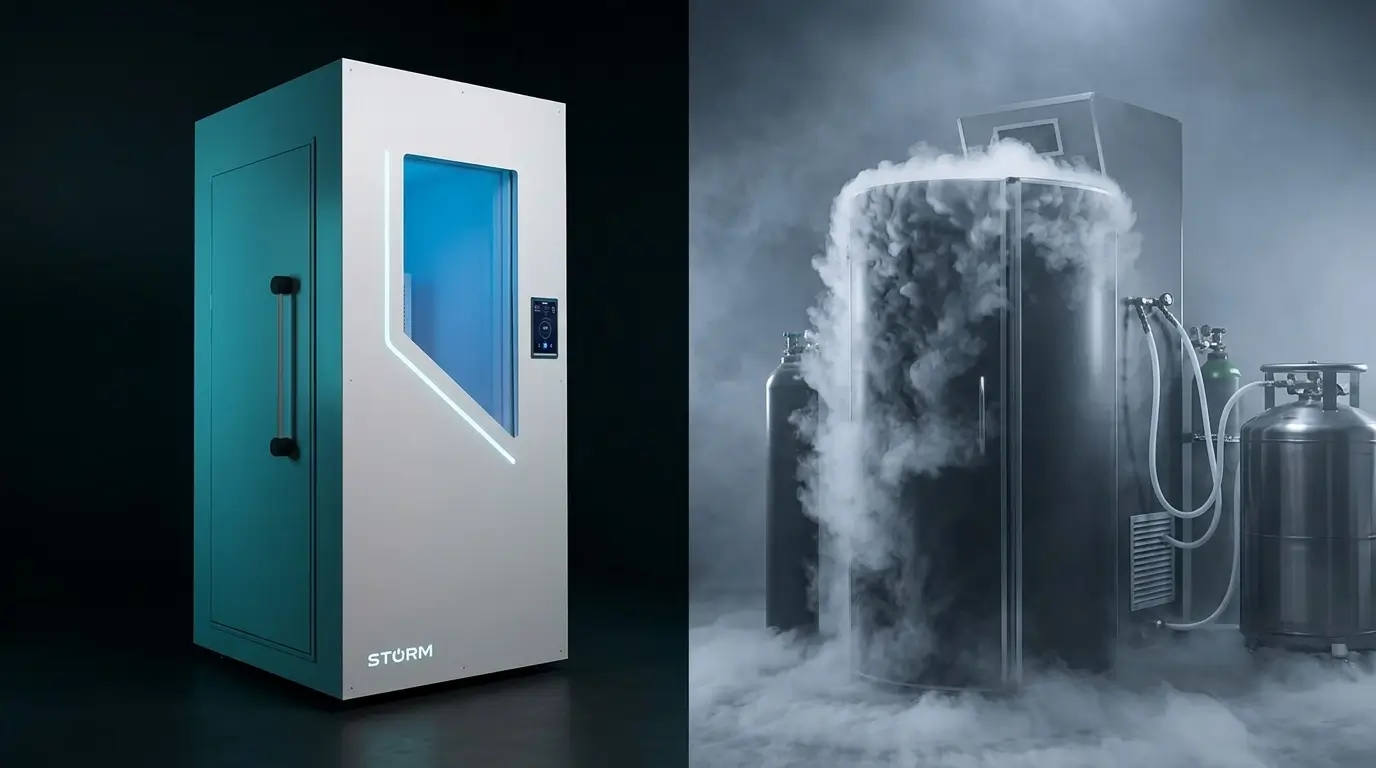
Electric chambers work with breathable interior air and no consumable. Nitrogen systems reach very low temperatures but require storage, safety precautions (asphyxiation risk from free nitrogen gas) and running costs of a reported 20,000 to 30,000 euros per year (Bouzigon et al., 2016; Lombardi et al., Frontiers in Physiology, 2017). For hotel operations without their own gas logistics, the electric design is usually more practical.
5. Throughput and recovery time
How many guests should use the system per day? Models differ considerably – from around a dozen applications daily to more than 100. A wellness hotel with moderate demand needs a different profile from a sports hotel with group use. The recovery time between sessions determines how smoothly operations run.
6. Space and infrastructure
Whole-body chambers need a suitable interior space (from around 12 m² for the POWERCAB) with an appropriate power connection. Clarify ceiling height, ventilation and power supply early on – these factors determine feasibility at the site.
7. Operation and staff
An app-controlled system with automatic programs reduces training effort and makes operation by spa staff reproducible. Ask about the interface, the stored programs and the safety features (emergency stop, visual contact, door release from inside).
8. Build quality, maintenance and support
Across the service life, material quality, maintenance intervals and the availability of service and spare parts count. A premium system should make a consistent impression over years – for the guest and on the balance sheet.
Conclusion
The right cryo chamber for a hotel spa is not the one with the most spectacular number, but the one that delivers its cold reliably and reproducibly – evenly distributed and felt on the body – matches the expected throughput and adds up in operation and maintenance. As an electric whole-body chamber, the POWERCAB range is built precisely around these criteria – with four models for different operating sizes.
👉 Discover the POWERCAB for your operation
Sources
- Louis J, Theurot D, Filliard J-R, Volondat M, Dugué B, Dupuy O (2020): The use of whole-body cryotherapy: time- and dose-response investigation on circulating blood catecholamines and heart rate variability. European Journal of Applied Physiology 120:1733–1743. Full text (PMC)
- Bouzigon R, Grappe F, Ravier G, Dugué B (2016): Whole- and partial-body cryostimulation/cryotherapy: current technologies and practical applications. Journal of Thermal Biology 61:67–81. DOI
- Jdidi H, de Bisschop C, Dugué B, Bouzigon R, Douzi W (2024): Optimal duration of whole-body cryostimulation exposure to achieve target skin temperature: influence of body mass index. Journal of Physiological Anthropology 43:28. DOI
- Savic M, Fonda B, Sarabon N (2013): Actual temperature during and thermal response after whole-body cryotherapy in cryo-cabin. Journal of Thermal Biology 38:186–191. DOI
- Lombardi G, Ziemann E, Banfi G (2017): Whole-body cryotherapy in athletes: from therapy to stimulation. An updated review of the literature. Frontiers in Physiology 8:258. Full text (PMC)
blogs/news