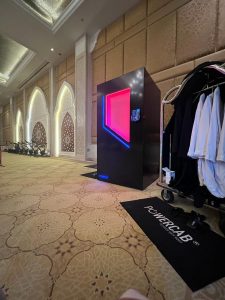
What Is a Cryo Chamber? Physiology, Technology and Selection

The cryo chamber – technically whole-body cryotherapy (WBC) or whole-body cryostimulation – is one of the most thoroughly studied methods in modern recovery. It has been the subject of controlled trials in sports medicine and physiology since the 1980s. This article sets out what happens physiologically, which technologies exist, and what matters when choosing a system.
What is a cryo chamber?
A cryo chamber is a room in which the body is exposed to very low air temperatures for a short, defined time. In the scientific literature, whole-body cryotherapy is defined by air temperatures below around –100 °C, with an exposure of typically one to four minutes (Bleakley et al., Open Access Journal of Sports Medicine, 2014). In practice, the cold that reaches the body also depends on air movement (windchill) and session duration – which is why, alongside air temperature, windchill and the skin temperature reached are meaningful too. The application is dry and performed standing – a fundamental difference from an ice bath, which cools via water (convection).
The physiology: a precise chain of responses
The stimulus of a cryo chamber is not a vague “feeling of cold" but a well-described physiological cascade. The skin is especially sensitive to it: the dermis contains roughly ten times more cold receptors than heat receptors (Bouzigon et al., Journal of Thermal Biology, 2016). During exposure, skin temperature at the extremities – such as the calves and forearms – falls rapidly and can drop by up to around 10 °C, while core and muscle temperature remain largely constant (Doets et al., Complementary Therapies in Medicine, 2021).
This rapid drop stimulates the skin’s cold receptors and, through them, the thermoregulatory centre in the hypothalamus. The central response is cutaneous vasoconstriction – the narrowing of near-surface blood vessels, by which the body limits heat loss and protects core temperature. It is accompanied by activation of the sympathetic nervous system and a release of noradrenaline (Bouzigon et al., 2016). After leaving the chamber the process reverses: a cold-induced vasodilation sets in that can temporarily raise skin blood flow markedly. Skin temperature returns to its starting value only after around 14 minutes (Bouzigon et al., 2016).
Why temperature and dose measurably matter
For operators, what matters above all is that the stated cold is reached reliably and reproducibly and reaches the body evenly. It is not a briefly displayed peak value that determines a successful session, but cold delivered dependably and repeatably.
Duration follows a clear logic too. A randomised cross-over study defined a skin threshold of 13.6 °C at which the characteristic cold-related effects set in, and measured how long different people take to reach it: normal-weight participants after 4 minutes, overweight participants after just 3.5 – individual body composition influences the optimal dose (Jdidi et al., Journal of Physiological Anthropology, 2024). In practice, a typical session lasts 2 to 4 minutes.
Chamber or cabin? A physiologically relevant distinction
Two designs are often confused on the market:
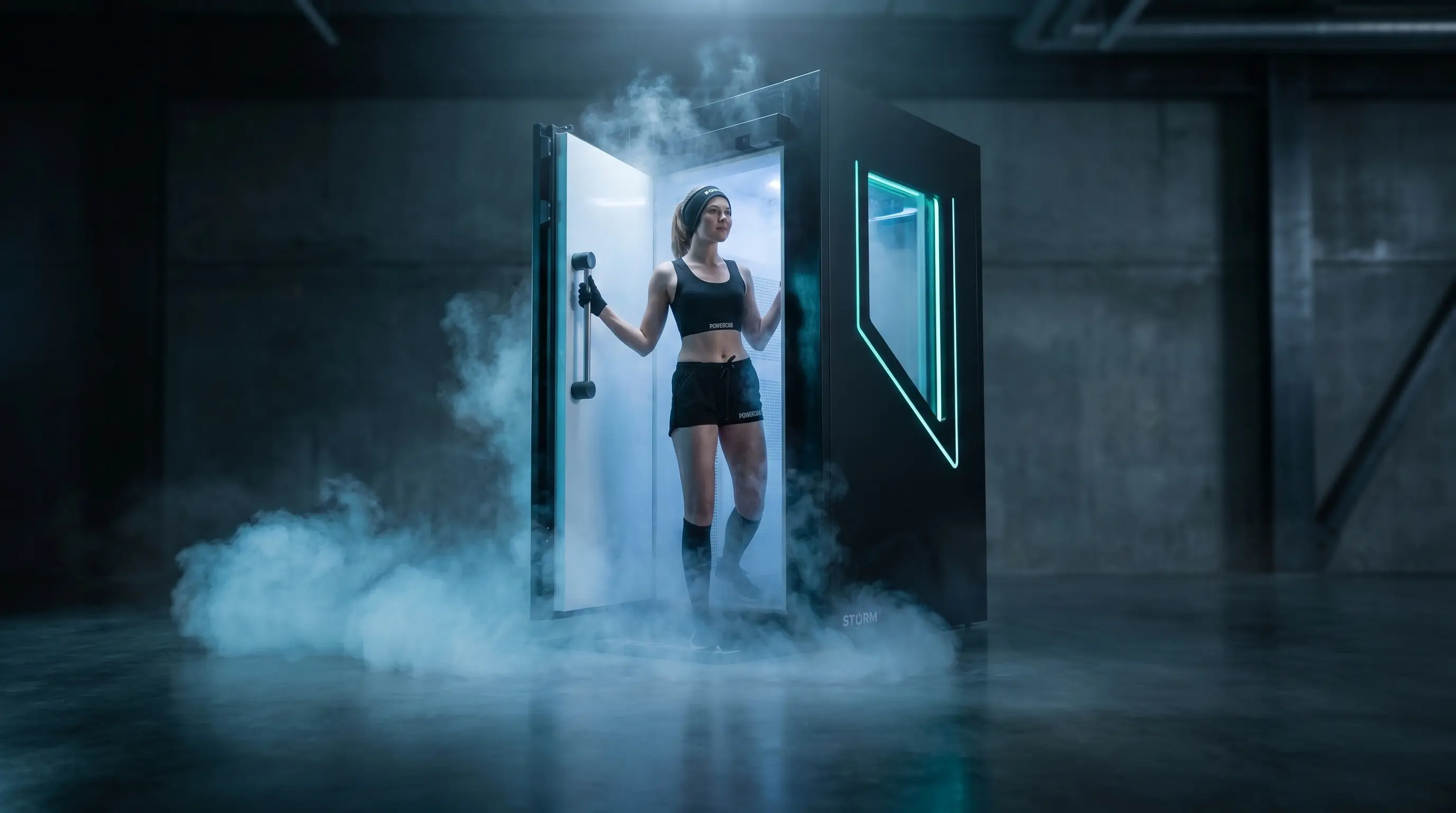
- The true whole-body cryo chamber encloses the entire body, including the head, in a controlled cold-air environment.
- The cryo-cabin (partial-body cryotherapy) leaves the head above the rim; only the body stands in the cold air (Bouzigon et al., 2016).
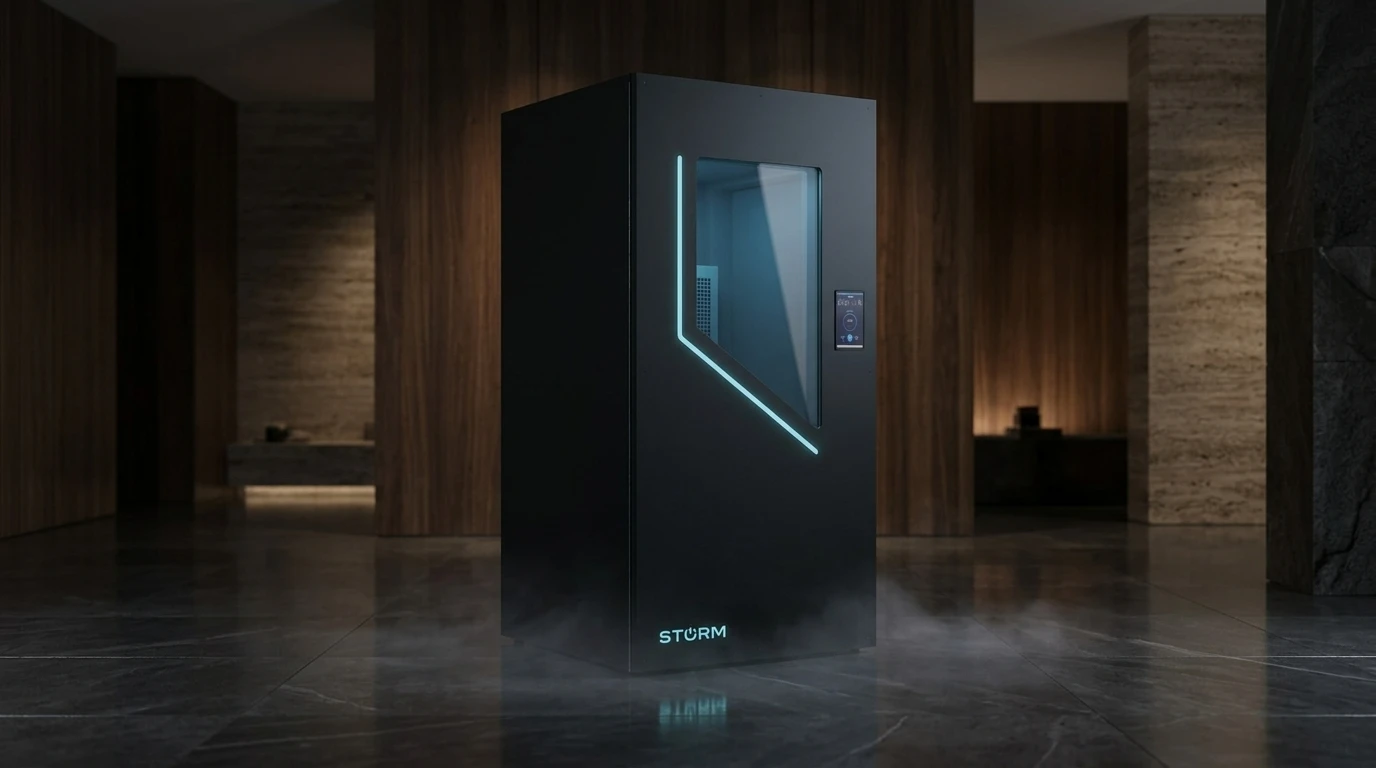
The difference is not only structural. Studies suggest that exposing the head as well additionally strengthens the parasympathetic (vagal) response via cold stimulation in the region of the trigeminal nerve (Hausswirth et al., 2013, in Bouzigon et al., 2016). The POWERCAB is a true whole-body cryo chamber.
Electric or nitrogen? The question of cold generation
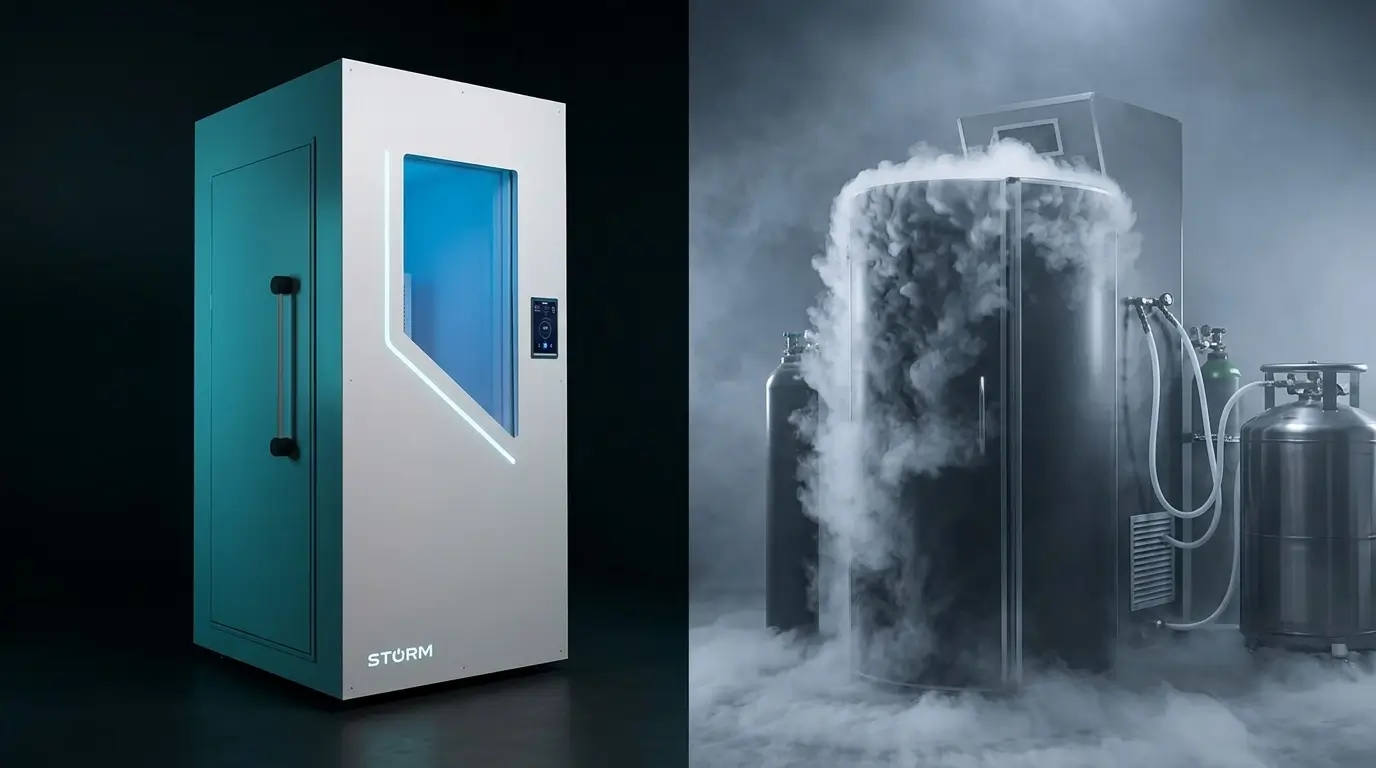
Two methods dominate cold generation. In the nitrogen-based method, liquid nitrogen is vaporised. In the electric method, a mechanical refrigeration system cools the air – comparable to a heat pump, only in reverse (Bouzigon et al., 2016). Electric whole-body chambers work with a consistently breathable cold-air environment and need no nitrogen consumable. The POWERCAB models operate electrically with 100% natural refrigerant and reach temperatures down to −110 °C – depending on the model as selectable windchill levels (−70/−90/−110 °C) or as an evaporator temperature of −110 °C.
A technical detail with practical relevance: cold air is denser and collects at the bottom of a chamber. In static systems this can create a vertical temperature gradient that leads to uneven skin cooling (Jdidi et al., 2024). Uniform temperature control is therefore a genuine quality feature – not an accessory.
What the research on recovery shows
In the context of sport and recovery, the evidence base is substantial. A meta-analysis of 99 studies placed cryotherapy among the techniques that measurably reduce perceived muscle load after exercise (Dupuy et al., Frontiers in Physiology, 2018). In a study of eleven elite athletes, a single three-minute exposure at –110 °C raised indices of parasympathetic activity and was associated with improved lactate clearance and higher VO2peak values in a subsequent bout (Schaal et al., Medicine & Science in Sports & Exercise, 2014). And a controlled study found that a three-minute exposure in the evening improved subjective sleep quality in physically active men (Douzi et al., European Journal of Sport Science, 2019).
What biomarker studies report
Part of the research has measured not only sensations and performance values but also inflammatory and blood markers. These results come from the respective study populations and describe what the researchers observed there – they are not a statement about any single product.
In a randomised cross-over study of eleven endurance-trained men, Pournot et al. (PLoS ONE, 2011) compared whole-body cryotherapy with passive recovery after a demanding running bout. They reported a lower value of the pro-inflammatory marker IL-1β (1 h after exercise) and of CRP (24 h later), together with a higher value of the anti-inflammatory IL-1ra – while TNF-α, IL-6 and IL-10 remained unchanged compared with the passive condition. Those last, absent effects are named here deliberately: they are part of the honest picture.
Beyond sports physiology, a pilot study followed fifteen healthy adults over roughly nine months (Chun, Joseph & Pojednic, Interactive Journal of Medical Research, 2024). A higher number of exposures at –110 °C was associated there with lower values of the inflammatory marker hsCRP (−0.14 mg/L per session). The authors themselves stress the limits: small sample, pilot character, and a slight – clinically irrelevant – rise in HbA1c at the end of the study.
Important for context: reviews point out that the findings are not uniform on every point. Results for IL-6, for instance, vary between studies depending on the exercise protocol (Lombardi et al., Frontiers in Physiology, 2017). Some authors also discuss that a dampened inflammatory response in strength training could slightly attenuate muscle building – an example of how “more” does not mean “better” in every context.
Worth noting is also what the research leaves open: after several daily exposures, the autonomic response in the Louis et al. (2020) study was smaller than on day one – a sign of physiological habituation. Such distinctions are the hallmark of a seriously studied field.
Where it fits
- For hotels & spas: as a premium-capable recovery offering with clear differentiation value.
- For sports clubs & recovery studios: as a reproducible building block in the recovery routine.
- For rehab & physiotherapy operations: as a modern extension of the service range.
What operators should consider
The physiology makes the selection criteria almost self-evident: the temperature actually reached (not just the one advertised), the design (a true chamber rather than a cabin), uniform temperature control without strong stratification, the method of cold generation, the power consumption in operation, plus maintenance and build quality. These factors shape the experience – and the economics across the entire service life.
Conclusion
A cryo chamber works through a precise, well-studied physiological cascade – which is exactly why temperature, dose and design are not side issues. As an electric whole-body cryo chamber, the POWERCAB is built on a full, reproducible concept that controls these parameters.
Sources
- Bleakley CM, Bieuzen F, Davison GW, Costello JT (2014): Whole-body cryotherapy: empirical evidence and theoretical perspectives. Open Access Journal of Sports Medicine 5:25–36. Full text (PMC)
- Bouzigon R, Grappe F, Ravier G, Dugué B (2016): Whole- and partial-body cryostimulation/cryotherapy: current technologies and practical applications. Journal of Thermal Biology 61:67–81. DOI
- Louis J, Theurot D, Filliard J-R, Volondat M, Dugué B, Dupuy O (2020): The use of whole-body cryotherapy: time- and dose-response investigation on circulating blood catecholamines and heart rate variability. European Journal of Applied Physiology 120:1733–1743. Full text (PMC)
- Jdidi H, de Bisschop C, Dugué B, Bouzigon R, Douzi W (2024): Optimal duration of whole-body cryostimulation exposure to achieve target skin temperature: influence of body mass index. Journal of Physiological Anthropology 43:28. DOI
- Dupuy O, Douzi W, Theurot D, Bosquet L, Dugué B (2018): An evidence-based approach for choosing post-exercise recovery techniques … a systematic review with meta-analysis. Frontiers in Physiology 9:403. Full text (PMC)
- Schaal K, Le Meur Y, Louis J et al. (2014): Whole-body cryostimulation limits overreaching in elite synchronized swimmers. Medicine & Science in Sports & Exercise 46:1416–1425. DOI
- Douzi W, Dupuy O, Tanneau M, Boucard G, Bouzigon R, Dugué B (2019): 3-min whole-body cryotherapy/cryostimulation after training in the evening improves sleep quality in physically active men. European Journal of Sport Science 19:860–867. DOI
- Pournot H, Bieuzen F, Louis J, Mounier R, Fillard J-R, Barbiche E, Hausswirth C (2011): Time-course of changes in inflammatory response after whole-body cryotherapy multi exposures following severe exercise. PLoS ONE 6(7):e22748. Full text (PMC)
- Chun E, Joseph R, Pojednic R (2024): Whole-body cryotherapy reduces systemic inflammation in healthy adults: pilot cohort study. Interactive Journal of Medical Research 13:e60942. Full text
- Lombardi G, Ziemann E, Banfi G (2017): Whole-body cryotherapy in athletes: from therapy to stimulation. An updated review of the literature. Frontiers in Physiology 8:258. Full text (PMC)
blogs/news