Cryotherapy in Professional Sport: Why Elite Teams Turn to Cold
In the locker room of the US national team, in the training centres of leading European clubs, and among endurance athletes, whole-body cryotherapy has long been part of the recovery routine. Why does professional sport turn to cold – and what does the evidence actually say? This article sets it out.
Why recovery decides performance
Recovery after exertion is a central factor in injury prevention and in the return to performance (Bouzigon et al., Frontiers in Sports and Active Living, 2021). Where competitions are tightly scheduled, the quality of recovery between sessions itself becomes a performance factor. This is exactly where cryotherapy has become a widespread tool.
What the research on recovery shows
The evidence on perceived muscle load is the most robust. A meta-analysis of 99 studies placed cryotherapy among the techniques that measurably reduce perceived muscle load after exercise (Dupuy et al., Frontiers in Physiology, 2018).
In elite athletes, a single three-minute exposure at very low temperatures was found to raise indices of parasympathetic activity, accompanied by improved lactate clearance and higher VO2peak values in a subsequent bout (Schaal et al., Medicine & Science in Sports & Exercise, 2014). And for the often-underestimated factor of sleep, a controlled study found that an evening exposure improved subjective sleep quality in physically active men (Douzi et al., European Journal of Sport Science, 2019).
The World Cup context
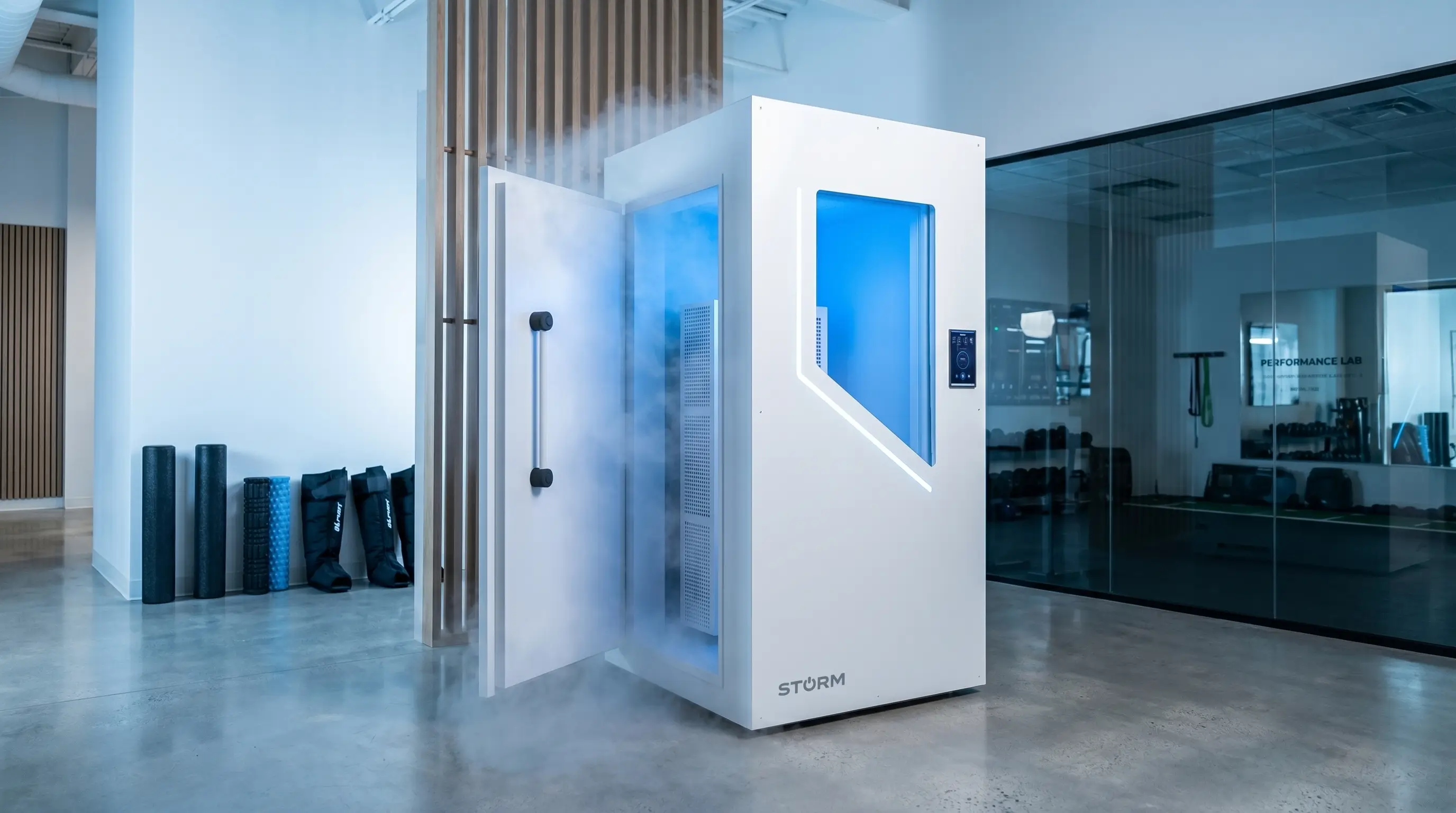
That recovery technology plays a role around major tournaments is no accident: with dense fixture lists under demanding climatic conditions, every reproducible recovery measure becomes a plannable building block. Whole-body cryotherapy provides a short, standardisable stimulus of a few minutes – a practical advantage in tightly scheduled competition.
What biomarker studies report
Part of the research has also measured inflammatory markers. These results come from the respective study populations and describe what was observed there – they are not a statement about any single product. In a study of eleven trained runners, Pournot et al. (PLoS ONE, 2011) reported, after whole-body cryotherapy, a lower rise in the pro-inflammatory IL-1β and a higher value of the anti-inflammatory IL-1ra compared with passive recovery – while other markers (TNF-α, IL-6, IL-10) remained unchanged.
Staying honest: the limits
A serious account also includes the open questions. Reviews point out that the findings are not uniform on every point (Lombardi et al., Frontiers in Physiology, 2017). It is also discussed that a dampened inflammatory response in strength training could slightly attenuate adaptations – which is why use should be targeted and context-dependent, not blanket. A degree of habituation after several daily exposures is also documented (Louis et al., European Journal of Applied Physiology, 2020).
Conclusion
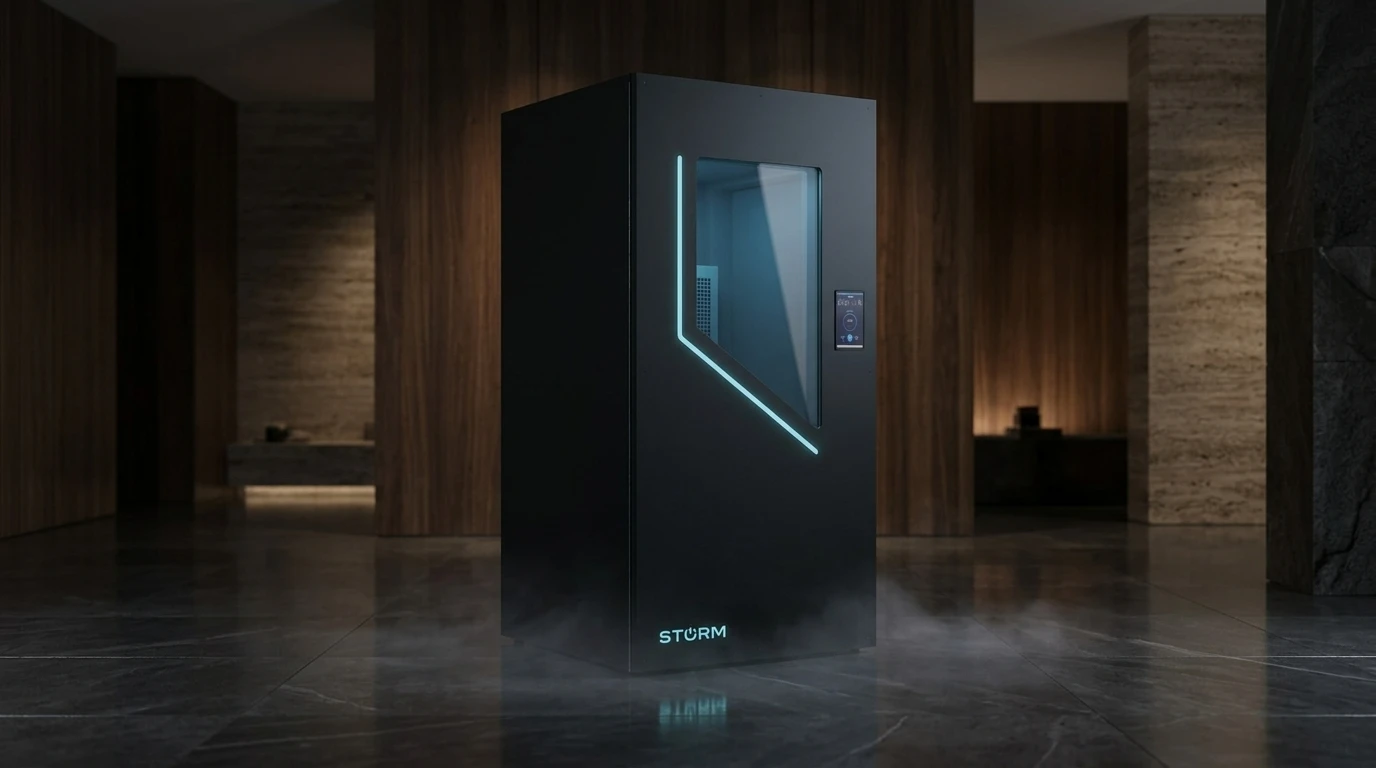
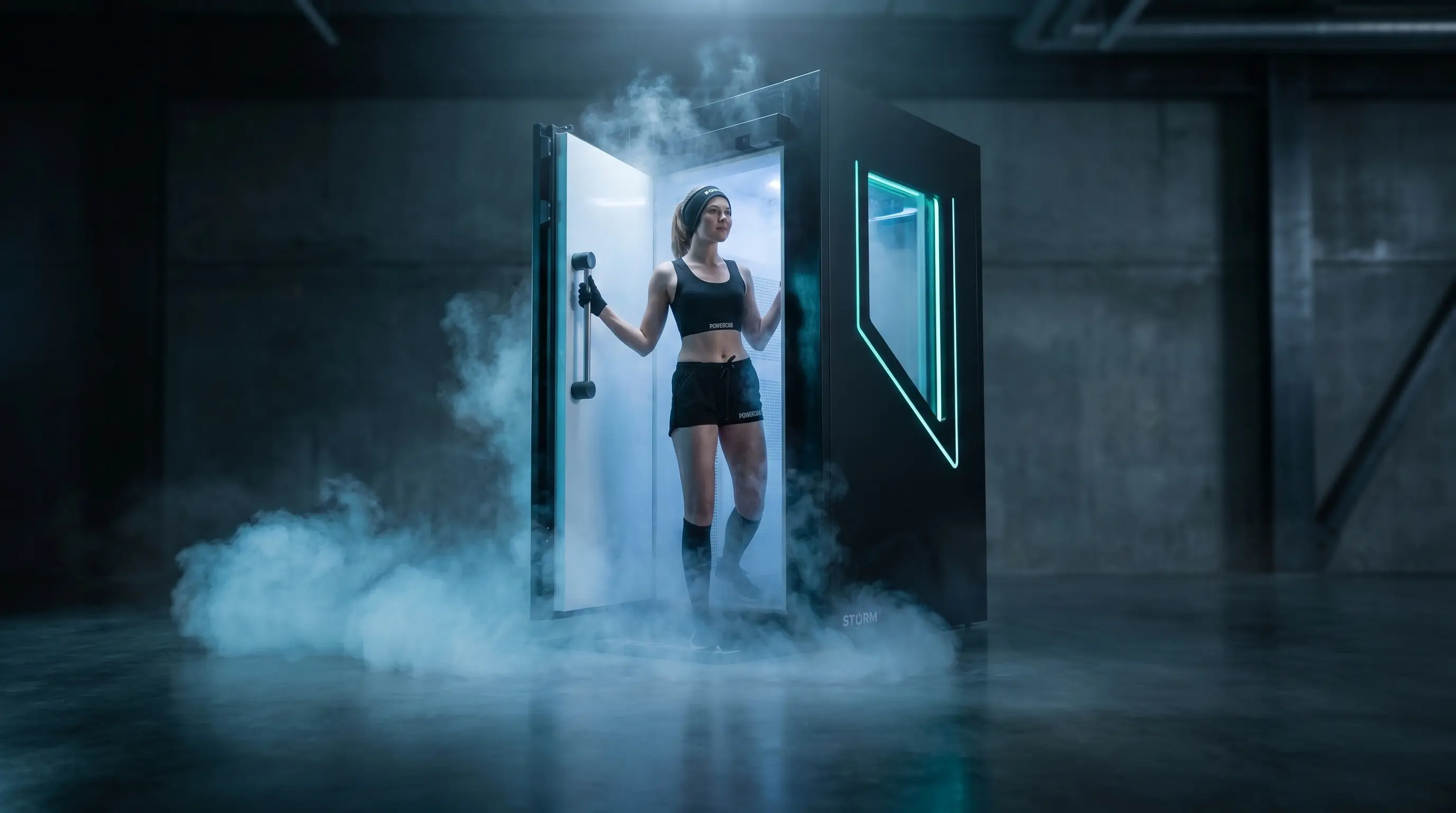
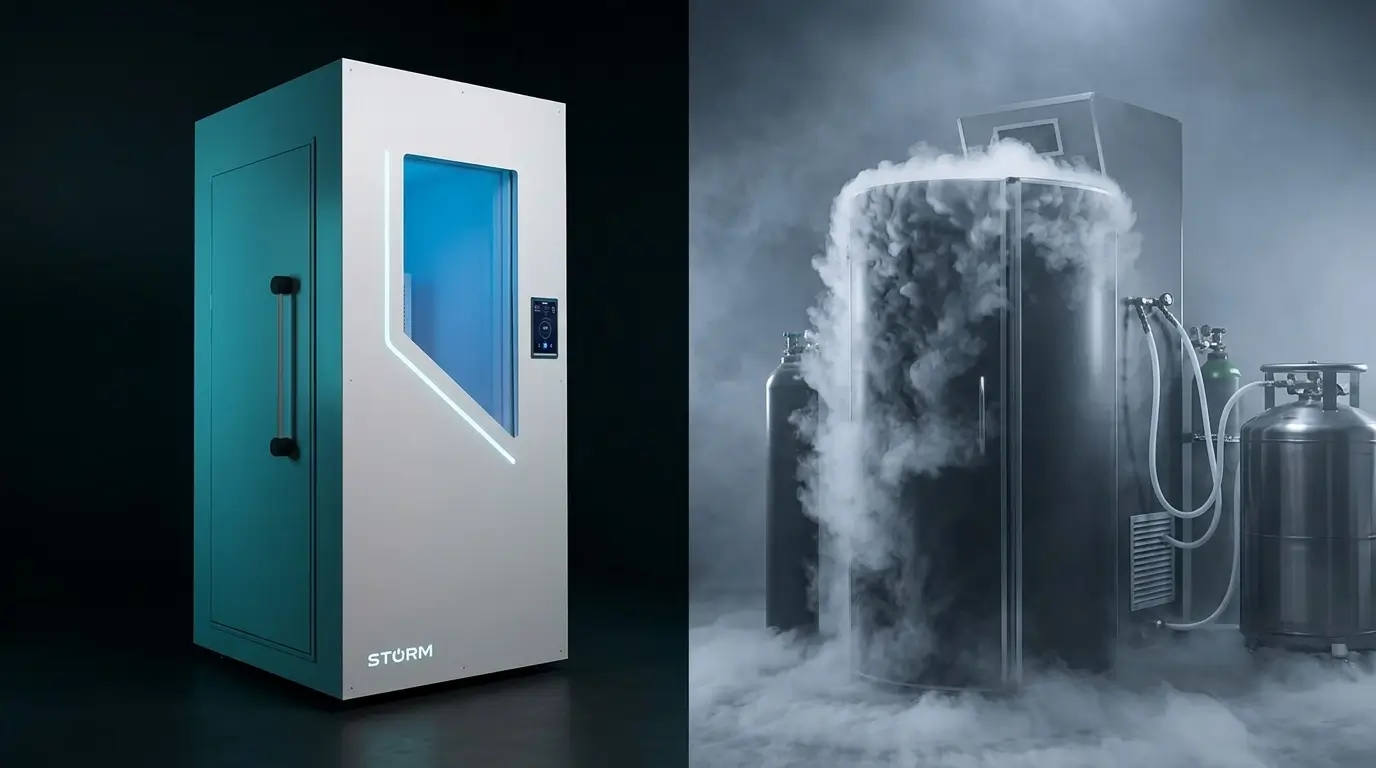
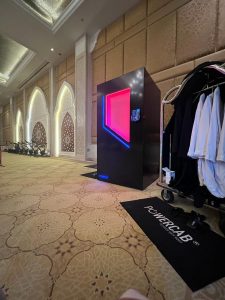
Professional sport uses whole-body cryotherapy because it delivers a short, reproducible recovery stimulus whose benefit for perceived muscle load, autonomic recovery and sleep is well documented – with an honest view of the open questions. As an electric whole-body cryo chamber going down to−110 °C with app-controlled programs, the POWERCAB is designed for exactly this professional use.
Sources
- Bouzigon R et al. (2021): Cryostimulation for post-exercise recovery in athletes: a consensus and position paper. Frontiers in Sports and Active Living 3:688828. Full text (PMC)
- Dupuy O, Douzi W, Theurot D, Bosquet L, Dugué B (2018): An evidence-based approach for choosing post-exercise recovery techniques … a systematic review with meta-analysis. Frontiers in Physiology 9:403. Full text (PMC)
- Schaal K, Le Meur Y, Louis J et al. (2014): Whole-body cryostimulation limits overreaching in elite synchronized swimmers. Medicine & Science in Sports & Exercise 46:1416–1425. DOI
- Douzi W, Dupuy O, Tanneau M, Boucard G, Bouzigon R, Dugué B (2019): 3-min whole-body cryotherapy/cryostimulation after training in the evening improves sleep quality in physically active men. European Journal of Sport Science 19:860–867. DOI
- Pournot H, Bieuzen F, Louis J, Mounier R, Fillard J-R, Barbiche E, Hausswirth C (2011): Time-course of changes in inflammatory response after whole-body cryotherapy multi exposures following severe exercise. PLoS ONE 6(7):e22748. Full text (PMC)
- Lombardi G, Ziemann E, Banfi G (2017): Whole-body cryotherapy in athletes: from therapy to stimulation. An updated review of the literature. Frontiers in Physiology 8:258. Full text (PMC)
- Louis J, Theurot D, Filliard J-R, Volondat M, Dugué B, Dupuy O (2020): The use of whole-body cryotherapy: time- and dose-response investigation on circulating blood catecholamines and heart rate variability. European Journal of Applied Physiology 120:1733–1743. Full text (PMC)
blogs/news