The POWERCAB in Operation: Power, Throughput and Economics
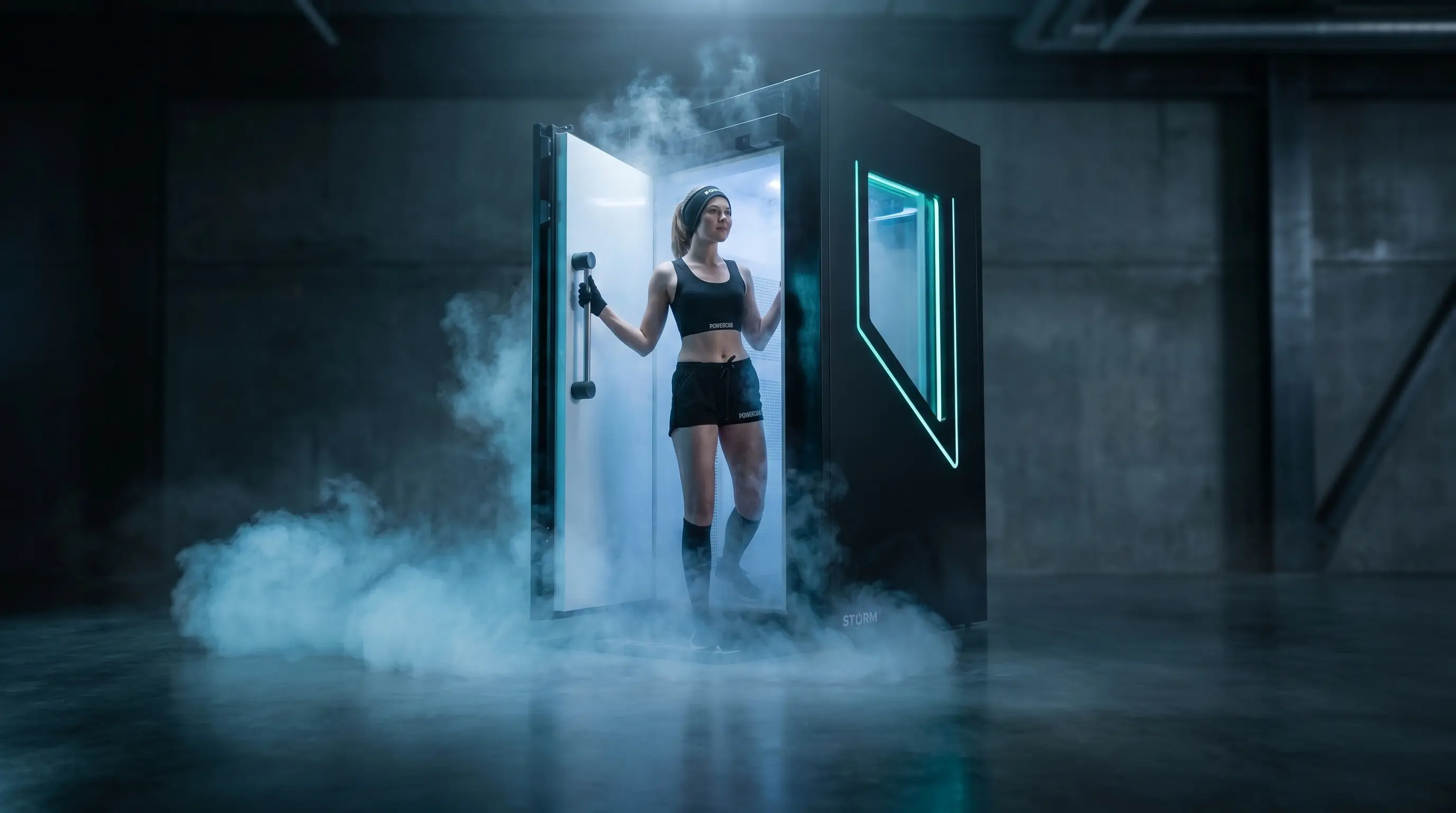
A cryo chamber is an investment that has to pay off over years. For operators, what counts is therefore not only whether a system reaches down to –110 °C, but what it costs in continuous operation, how many applications it manages per day, and what maintenance it entails. This article sets out the operating economics of the POWERCAB range.
Electrically operated: no consumable
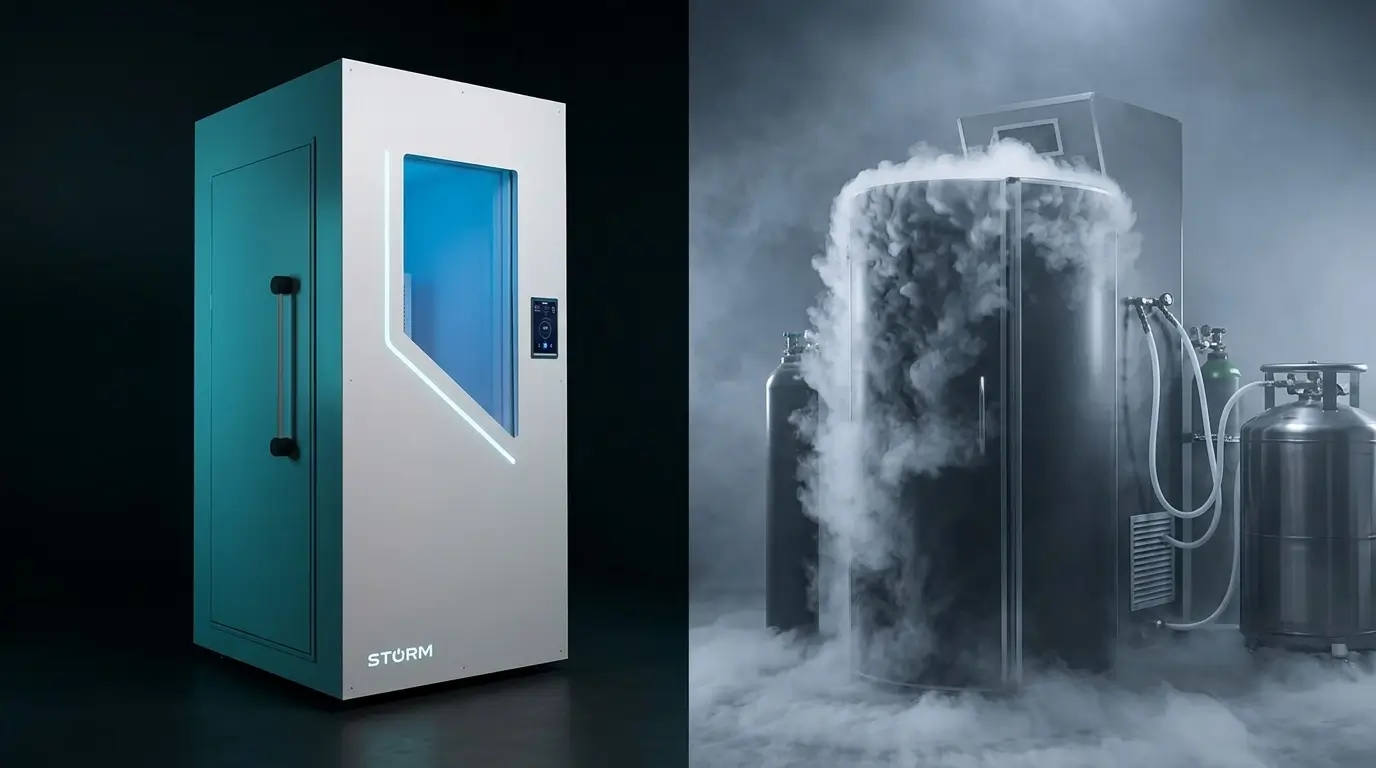
The POWERCAB models run electrically with 100% natural refrigerant. The most economically important difference from nitrogen-based systems: there is no ongoing consumable. Nitrogen-operated systems incur reported annual nitrogen costs on the order of 20,000 to 30,000 euros per year (Bouzigon et al., Journal of Thermal Biology, 2016), plus storage and logistics. With the electric design, the running expense is limited to electricity and maintenance.
Power consumption by model
Power consumption scales with the capacity and throughput of each system:
Average power draw per model · kW
Actual consumption depends on the usage profile: a system in continuous studio operation draws differently from one that only runs at peak times. The kW figure is the basis for a robust operating-cost calculation across the service life.
Throughput: applications per day
For commercial viability, throughput is decisive. Here the models differ markedly:
- ONE: up to 12 applications (up to 36 in continuous operation) per day – recovery time around 60 minutes, then 20 minutes per session.
- LIGHT: up to 50 applications per day – around 15 minutes recovery time.
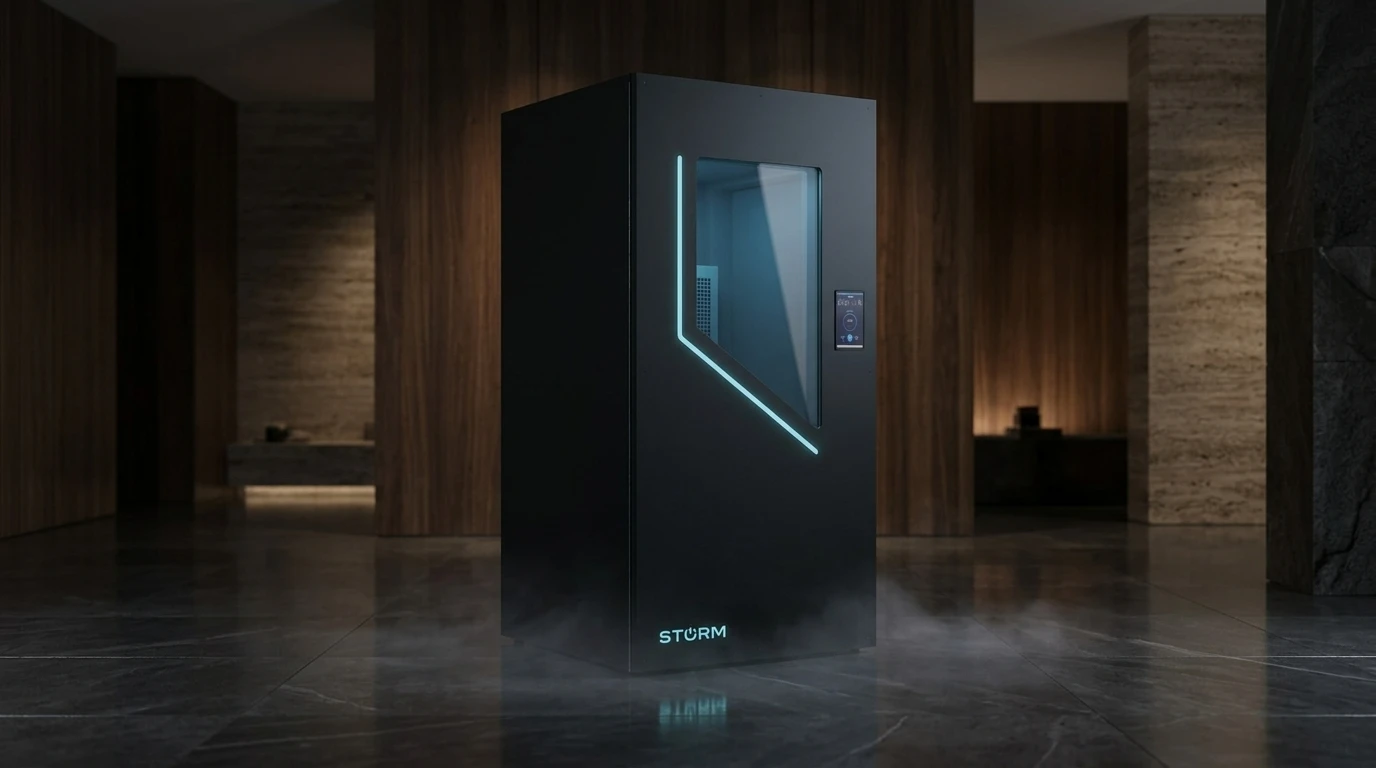
- STORM: more than 100 applications per day – around 10 minutes.
- PRO: more than 100 applications per day – around 5 minutes recovery time.
A hotel spa with occasional use has different requirements from a recovery studio with high turnover. Choosing the model is therefore less a question of maximum temperature – which reaches down to −110 °C (windchill), depending on the model – than of expected throughput.
Space and infrastructure
The POWERCAB models are designed for indoor installation (dimensions roughly 1944 × 1975 × 2425 mm) and require a room from about 12 m². Control is via an app on an iPad with automatic programs. Power supply, ceiling height and ventilation should be clarified early in site planning.
Why temperature control matters economically too
Uniform temperature control is not only a question of effect but of reproducibility in operation. Studies show that the characteristic cooling effect depends on the target temperature being reached reliably and reproducibly and that cold air stratifies downward without good control (Jdidi et al., Journal of Physiological Anthropology, 2024). A system that holds its target temperature reliably and evenly delivers a consistent experience – the basis for satisfied, returning customers.
Conclusion
The economic view of a cryo chamber goes beyond the purchase price: power consumption (2–7 kW depending on the model), throughput (12 to more than 100 applications per day), space requirements and the absence of a consumable determine the total cost across the service life. With four models, the POWERCAB range covers different operating profiles – from occasional hotel use to a high-throughput studio.
Sources
- Bouzigon R, Grappe F, Ravier G, Dugué B (2016): Whole- and partial-body cryostimulation/cryotherapy: current technologies and practical applications. Journal of Thermal Biology 61:67–81. DOI
- Louis J, Theurot D, Filliard J-R, Volondat M, Dugué B, Dupuy O (2020): The use of whole-body cryotherapy: time- and dose-response investigation on circulating blood catecholamines and heart rate variability. European Journal of Applied Physiology 120:1733–1743. Full text (PMC)
- Jdidi H, de Bisschop C, Dugué B, Bouzigon R, Douzi W (2024): Optimal duration of whole-body cryostimulation exposure to achieve target skin temperature: influence of body mass index. Journal of Physiological Anthropology 43:28. DOI
blogs/news